

Vehicle-to-Vehicle (V2V) communication is a cutting-edge technology aiming to significantly enhance road safety by enabling cars to share real-time data about location, speed, and critical parameters. This system allows drivers to receive instant warnings about potential hazards, preventing collisions and improving overall safety for all users. Despite challenges in implementing robust security measures and navigating regulatory frameworks, V2V communication integrates with smart city solutions to optimize traffic flow, reduce congestion, and enhance emergency response times. As 5G technology advances and standardization efforts progress, public education and consumer preference will drive widespread adoption, transforming roads into safer, more interconnected urban environments, with Select Vehicle-to-Vehicle Communication playing a pivotal role in this transformation.
Safer streets are a shared aspiration, and cutting-edge technology plays a pivotal role in making this vision a reality. This article explores how Vehicle-to-Vehicle (V2V) Communication has the potential to revolutionize road safety. We delve into the basics of this technology, its ability to enhance safety through automated alerts, and its integration with smart city solutions. Understanding the challenges and future prospects of V2V communication is essential in navigating towards a safer transportation ecosystem for all users.
- Understanding Vehicle-to-Vehicle Communication: A Basic Overview
- The Potential of V2V Technology in Enhancing Road Safety
- How Automated Alerts Can Improve Street Safety for All Users
- Challenges and Considerations: Implementing V2V Communication Systems
- Future Prospects: Integrating V2V with Other Smart City Solutions
Understanding Vehicle-to-Vehicle Communication: A Basic Overview

Vehicle-to-Vehicle (V2V) communication is a critical technology for enhancing road safety and enabling autonomous driving. By establishing wireless connectivity between vehicles, V2V systems can share real-time data about their location, speed, and other vital parameters. This enables nearby cars to anticipate potential hazards, such as sudden stops or sharp turns, and react accordingly. For instance, if a vehicle suddenly brakes, V2V technology allows adjacent cars to receive this alert and apply their brakes in time, preventing or mitigating collisions.
The security of V2V communications is paramount to ensure the integrity of these safety measures. As vehicles become more connected, they may face cyber threats that could compromise the accuracy of data exchange. Therefore, robust security protocols must be implemented to protect against unauthorized access and tampering, ensuring that V2V for autonomous driving remains reliable and safe.
The Potential of V2V Technology in Enhancing Road Safety

The integration of Vehicle-to-Vehicle (V2V) communication technology holds immense promise in transforming our roads into safer spaces for all users, particularly pedestrians and vulnerable road users. By enabling direct communication between vehicles, V2V technology can facilitate the real-time sharing of data on speed, position, and intentions, creating a network effect that enhances overall safety. This innovative approach allows vehicles to ‘talk’ to each other, providing immediate warnings about potential hazards such as sudden stops or impending collisions, thereby giving drivers crucial split seconds to react and avoid accidents.
V2V communication can also contribute to more comprehensive pedestrian safety measures by relaying information about vehicle presence and movement to pedestrians and cyclists, ensuring they are aware of potential risks. Moreover, the data shared through V2V networks can feed into transportation infrastructure upgrades, enabling smarter design and management of roads, intersections, and traffic signals to accommodate emerging trends in automated vehicles and improved safety standards.
How Automated Alerts Can Improve Street Safety for All Users

Automated vehicle alerts have the potential to significantly enhance street safety for every user on the road. By employing Vehicle-to-Vehicle (V2V) communication technology, vehicles can exchange data in real-time, creating a network of connected and informed drivers. This enables them to receive instant warnings about potential hazards, such as sudden stops or obstacles, allowing for quicker reaction times and more effective collision avoidance.
The networked vehicles benefits extend beyond individual safety. In multi-modal transportation networks, V2V communication technology can foster better coordination among different modes of transport, including cars, buses, trucks, and pedestrians. This integrated approach promises to streamline traffic flow, reduce congestion, and ultimately make streets safer for all, creating a more harmonious and efficient urban mobility ecosystem.
Challenges and Considerations: Implementing V2V Communication Systems
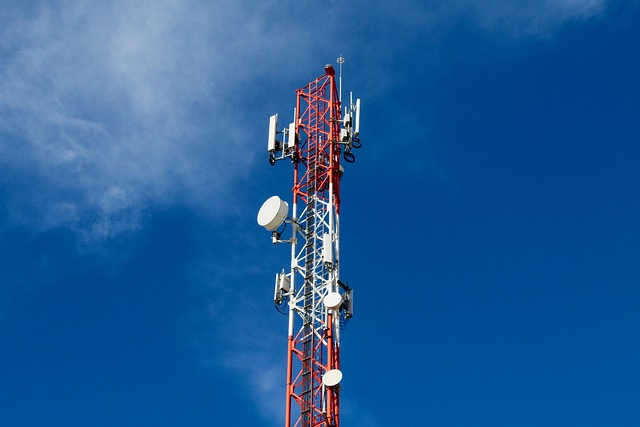
Implementing Vehicle-to-Vehicle (V2V) communication systems presents several challenges and considerations that are crucial to ensuring safer streets. One of the primary hurdles is developing robust regulatory frameworks that facilitate consumer adoption while addressing privacy concerns and standardization issues within the automotive industry. The rapid advancement in wireless standards, such as 5G technology, offers promising solutions for high-speed data exchange between vehicles, enabling real-time alerts and enhancing overall connected car safety features.
However, achieving seamless integration of V2V networking requires careful navigation through complex technical and legal landscapes. Standardization efforts are essential to enable interoperability among different vehicle models and communication protocols. As the technology matures, understanding consumer preferences and educating the public about the benefits of V2V communication will be key drivers for widespread adoption, ultimately transforming our roads into safer, more interconnected environments.
Future Prospects: Integrating V2V with Other Smart City Solutions

As we move forward into an era dominated by intelligent and automated vehicles, the potential for Vehicle-to-Vehicle (V2V) communication to transform our streets becomes increasingly clear. Integrating V2V technology with other smart city solutions presents a promising prospect for enhancing urban mobility and safety. By seamlessly connecting vehicles, sensors, and infrastructure, these integrated systems can create a comprehensive network that optimizes traffic flow, reduces congestion, and enhances emergency response times.
Imagine a future where V2V in emergency services becomes the norm, allowing vehicles to warn each other of impending hazards, accidents, or road closures. This real-time data exchange can contribute to congestion reduction strategies by enabling drivers to make informed decisions, avoiding heavily congested areas, and subsequently improving overall urban mobility. The applications for smart cities are vast, promising a safer, more efficient, and connected urban environment.