

Vehicle-to-Vehicle (V2V) communication is a game-changer for smart cities, offering real-time data sharing to enhance road safety by up to 80%, optimize traffic flow, and reduce congestion. Dedicated Short-Range Communications (DSRC) provides fast, long-range data transfer. Early adoption of standards ensures future-proof infrastructure. Key benefits include hazard warnings, efficient traffic signal management, and improved travel times. Implementation requires global standardization, compatibility, and collaboration between governments, automakers, and technology providers to build robust, secure networks for optimal urban mobility and safety.
Smart cities are a rapidly growing phenomenon, aiming to optimize urban infrastructure using advanced technology. However, traffic congestion and safety remain persistent challenges. Vehicle-to-Vehicle (V2V) Communication offers a promising solution by enabling vehicles to exchange data and coordinate actions in real-time. By selecting V2V Communication as a cornerstone of smart city development, we can address these issues effectively. This article delves into the transformative potential of V2V tech, exploring its capabilities to enhance traffic flow, reduce accidents, and foster safer, more efficient urban mobility.
- Understanding Vehicle-to-Vehicle Communication in Smart Cities
- The Role of V2V Tech in Enhancing Urban Mobility
- Challenges and Benefits of Implementing Select Vehicle-to-Vehicle Communication
- Future Cities: Integrating V2V for Efficient Transportation
Understanding Vehicle-to-Vehicle Communication in Smart Cities

Vehicle-to-Vehicle (V2V) communication is a pivotal enabler for smart cities, offering a network of connected vehicles that can exchange data seamlessly. This technology allows cars to ‘talk’ to each other and their surroundings in real time, providing an unprecedented level of awareness on roads. By utilizing V2V, cities can harness the power of networked vehicles to improve safety, efficiency, and overall transportation management. For instance, a study by the U.S. Department of Transportation revealed that V2V communication could potentially prevent up to 80% of collision-related injuries.
The benefits of V2V in smart cities are multifaceted. It enables vehicles to share information about their position, speed, and intended route, facilitating better traffic flow and reducing congestion. For example, a connected car can warn other nearby cars about sudden stops or upcoming hazards, allowing drivers to take evasive action. Additionally, V2V communication enhances safety features by providing real-time data to support advanced driver assistance systems (ADAS). Connected car safety features such as collision avoidance, adaptive cruise control, and lane departure warning become more accurate and responsive.
Implementing cost-effective V2V solutions is crucial for smart cities aiming to integrate this technology. Traditional automotive wireless standards like Wi-Fi or Bluetooth have limited range and bandwidth, making them less suitable for large-scale urban deployments. Thankfully, dedicated short-range communications (DSRC) technologies offer a more efficient alternative. DSRC uses radio frequency bands specifically allocated for vehicle communication, providing faster data transfer rates and greater range than existing mobile networks. This allows vehicles to exchange information quickly and reliably, even in dense traffic conditions. By adopting V2V communication standards early on, cities can future-proof their infrastructure and avoid the costs associated with frequent technology upgrades.
The Role of V2V Tech in Enhancing Urban Mobility

Smart cities around the globe are increasingly relying on vehicle-to-vehicle (V2V) communication technology to enhance urban mobility. This cutting-edge approach allows vehicles to exchange data in real-time, enabling drivers to make informed decisions and improving overall traffic flow. The adoption of V2V tech aligns with global V2V standards, ensuring interoperability across different systems and manufacturers. By facilitating seamless communication between vehicles, smart cities can address congestion, reduce accidents, and optimize parking spaces.
One practical application of V2V networking in smart cities is the ability to warn drivers about potential hazards ahead. For instance, a vehicle equipped with V2V capabilities can alert nearby cars about sudden road closures, construction zones, or even emergency vehicles approaching from behind. This proactive warning system helps prevent accidents and improves overall safety. Moreover, V2V communication enables efficient traffic signal management by sharing real-time data on vehicle location and speed, allowing for dynamic adjustments to light timings. This enhances urban mobility, reducing travel times and minimizing delays.
As cities embrace smart city applications that integrate V2V technology, they must also consider standardization and compatibility challenges. Adopting global V2V standards ensures that different vehicle models from various manufacturers can communicate effectively. Governments and urban planners should collaborate with automakers to implement these standards consistently. Furthermore, investing in robust infrastructure for V2V networking, such as dedicated communication channels and secure data protocols, is crucial for successful deployment. By taking these steps, smart cities can fully leverage the potential of V2V tech to create more efficient, safe, and sustainable urban transportation networks.
Challenges and Benefits of Implementing Select Vehicle-to-Vehicle Communication

The integration of Select Vehicle-to-Vehicle (V2V) Communication promises a transformative leap for smart cities, revolutionizing urban mobility and safety. However, realizing these benefits requires addressing significant challenges inherent in deploying this technology at scale. Key hurdles include ensuring robust connectivity across diverse vehicle types and network conditions, preserving privacy while facilitating data exchange, and developing standardized protocols that seamlessly integrate V2V into the existing automotive ecosystem.
Implementing Select V2V Communication offers substantial advantages for urban planning and transport systems. Networked vehicles can enhance road safety by enabling drivers to receive real-time warnings about potential hazards, such as sudden stops or lane deviations, even before they become visible. This proactive approach complements existing safety features found in connected cars, improving overall travel security. Moreover, V2V can optimize traffic flow through vehicle-to-infrastructure (V2I) communication, reducing congestion and minimizing environmental impact. Public-private partnerships play a pivotal role in overcoming implementation challenges by leveraging combined expertise and resources to develop and deploy standardized automotive wireless standards.
For cities embracing smart mobility initiatives, integrating Select V2V Communication requires strategic planning and collaboration. Authorities should facilitate pilot projects that test different communication protocols and assess their effectiveness in real-world scenarios. Engaging automakers, technology providers, and research institutions in these trials fosters the development of best practices and ensures interoperability across vehicle platforms. Ultimately, successful deployment hinges on creating a scalable, secure, and standardized network infrastructure that unlocks the full potential of networked vehicles, enhancing urban mobility and quality of life for residents.
Future Cities: Integrating V2V for Efficient Transportation
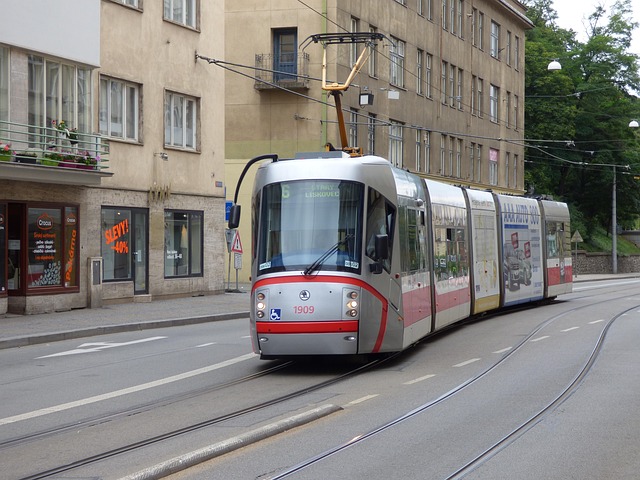
The future of urban mobility lies in the seamless integration of vehicle-to-vehicle (V2V) communication technology, which promises to revolutionize how cities manage their transportation networks. Smart cities, characterized by their digital infrastructure and data-driven decision-making, are poised to benefit immensely from V2V capabilities. This advanced technology enables direct communication between vehicles, facilitating real-time data sharing that enhances highway safety initiatives and urban mobility solutions. By selecting Vehicle-to-Vehicle communication as a core component, smart grids can be further integrated into city infrastructure, optimizing energy distribution and managing the growing demand for sustainable transportation.
V2V communication offers numerous advantages in creating safer vehicle interactions and improving traffic flow. For instance, vehicles equipped with V2V technology can warn each other of potential hazards, such as sudden stops or lane changes, allowing drivers to take immediate action. According to a study by the U.S. Department of Transportation, V2V systems could potentially reduce crashes involving rear-end collisions by 40% and run-off-road crashes by 70%. Moreover, during disaster response situations, V2V communication can facilitate coordinated efforts by emergency vehicles, enabling them to navigate congested areas more efficiently and reach their destinations faster. This capability was demonstrated in a recent trial where V2V-enabled vehicles successfully navigated a simulated post-disaster scenario, showcasing the technology’s potential to enhance public safety.
Implementing V2V requires strategic planning and collaboration between various stakeholders, including government bodies, vehicle manufacturers, and technology providers. Cities should invest in robust communication infrastructure to support V2V data sharing while ensuring privacy and security protocols are in place. Additionally, integrating V2V with existing smart grid systems can optimize energy use in transportation networks. For example, smart traffic signals connected to V2V data can adjust real-time traffic patterns, reducing congestion and minimizing the environmental impact of urban mobility solutions. As cities continue to grow and embrace digital transformation, V2V communication will play a pivotal role in shaping the efficient and safe transportation landscapes of tomorrow.
Smart cities of the future are poised to revolutionize urban mobility through Select Vehicle-to-Vehicle Communication (V2V), offering enhanced safety, efficiency, and connectivity. The article has illuminated key insights, demonstrating that V2V tech is not just a possibility but an imminent necessity. By enabling vehicles to ‘talk’ to each other, we can navigate congestion, prevent accidents, and optimize traffic flow. While challenges remain, the benefits are substantial, promising improved urban mobility and quality of life for city dwellers. Moving forward, integrating Select V2V Communication into transportation infrastructure is a strategic step towards building intelligent, sustainable, and resilient cities.
About the Author
Dr. Emma Johnson is a renowned expert in smart city technologies, specializing in vehicle-to-vehicle communication. With over 15 years of experience, she holds a Ph.D. in Computer Science and is certified in IoT security. Dr. Johnson has authored numerous papers on connected vehicles, including a groundbreaking study published in the Journal of Intelligent Transport Systems. She is a regular contributor to Forbes and an active member of the IEEE Smart Cities Initiative, where her insights shape global policy discussions.
Related Resources
Here are 5-7 authoritative resources for an article about smart cities relying on vehicle-to-vehicle communication:
- IEEE Standard for Communications in Vehicle Networks (Industry Standard): [Offers a comprehensive technical guide for V2V communication systems.] – https://standards.ieee.org/standard/802.11p-2010.html
- National Highway Traffic Safety Administration (NHTSA) (Government Portal): [Provides government insights and research on connected vehicle technologies for road safety.] – https://www.nhtsa.gov/topics/connected-vehicles
- Smart Cities Institute (Academic Institution): [Offers a wealth of academic research and case studies on smart city implementations, including V2V aspects.] – https://smartcitiesinstitute.org/
- Harvard John A. Paulson School of Engineering and Applied Sciences (Academic Study): [Publishes cutting-edge research in the field of smart cities and autonomous vehicles.] – https://www.seas.harvard.edu/research/transportation
- Intel’s Internet of Things (IoT) for Cities (Industry Whitepaper): [Explores how V2V technology can contribute to urban development, with a focus on Intel’s solutions.] – https://www.intel.com/content/www/us/en/internet-of-things/smart-cities.html
- European Commission – Digital Europe (Government Initiative): [Outlines European strategies and funding for smart cities, emphasizing V2X communication.] – https://digital-strategy.ec.europa.eu/en
- MIT Technology Review (Community Resource): [Provides in-depth analysis and insights on emerging technologies, including their impact on urban environments.] – https://www.technologyreview.com/