

Select Vehicle-to-Vehicle (V2V) Communication is a groundbreaking technology enhancing highway safety through instant data sharing among vehicles. It promises up to 80% crash prevention and smoother traffic flow in smart cities. Challenges include data privacy, security standards, and interoperability across vehicle models. Strategic planning, public-private partnerships, and regulatory frameworks are crucial for widespread adoption by 2030, potentially reducing accidents, delays, and emissions globally.
The seamless flow of traffic on our highways is a complex dance, often marred by communication gaps between vehicles. This is where Vehicle-to-Vehicle (V2V) Communication emerges as a transformative solution. As the world grapples with ever-increasing road congestion and safety concerns, V2V tech offers a promising avenue to achieve highway harmony. The ability of vehicles to instantaneously exchange data can prevent collisions, optimize routes, and enhance overall efficiency. This article delves into the intricacies of this innovative technology, exploring its potential impact on traffic management and safety while highlighting the critical role it plays in shaping the future of transportation.
- Understanding Highway Safety: The Need for Signal Coordination
- Instant Vehicle Signals: A Revolutionary Concept Unveiled
- How V2V Communication Enhances Roadway Efficiency
- Technical Framework: Implementing and Standardizing Signals
- Case Studies: Real-World Success Stories of Harmonized Highways
- Future Trends: Predicting Intelligent Transportation Systems
Understanding Highway Safety: The Need for Signal Coordination

The safety of our highways is a complex tapestry woven with threads of technology, infrastructure, and human behavior. As we navigate an era of rapidly evolving urban mobility solutions, including smart grid integration and public-private partnerships in transport urban planning, ensuring seamless and secure communication among vehicles has become paramount. Vehicle-to-Vehicle (V2V) communication emerges as a game-changer in this landscape, promising to revolutionize highway harmony by facilitating instant signal coordination.
Select V2V communication systems harness the power of inter-vehicle sensing systems to transmit critical data such as position, speed, and intended maneuvers, enabling vehicles to ‘talk’ to one another. This real-time exchange of information allows for predictive behavior on the road—a key factor in accident prevention. For instance, a study by the U.S. Department of Transportation revealed that V2V technology could potentially avoid or mitigate up to 80% of all severe crashes. By integrating these communication protocols with existing smart grid infrastructure, we can create urban mobility networks that are not only more efficient but also safer.
Public-private collaborations in transport urban planning play a crucial role in facilitating the widespread adoption of V2V technology. Public entities provide essential infrastructure and regulatory frameworks while private companies bring expertise in developing advanced communication systems. This partnership ensures that V2V solutions meet both safety standards and economic feasibility. As cities embrace smart grid technologies, the seamless integration of V2V communication becomes more achievable, paving the way for safer highways and more efficient urban mobility.
To realize this vision, however, careful consideration is required. Data privacy and security are paramount; protocols must be robust to protect against unauthorized access or malicious attacks. Furthermore, standardizing V2V communication protocols across different vehicle models and manufacturers is essential for widespread adoption. By addressing these challenges head-on, we can harness the transformative potential of V2V technology, shaping a future where highways are not just safer but also smarter, more connected, and responsive to the dynamic needs of urban mobility.
Instant Vehicle Signals: A Revolutionary Concept Unveiled

The concept of highway harmony—a seamless, safe, and efficient flow of traffic—has long been a goal for transportation experts. One groundbreaking approach gaining significant traction is Instant Vehicle-to-Vehicle (V2V) Communication, which promises to revolutionize how vehicles interact on our roads. This technology enables select vehicle-to-vehicle communication, creating a network of connected vehicles that can share real-time data, enhancing overall road safety and traffic management.
Instant V2V Communication systems offer numerous benefits for networked vehicles, enabling them to “talk” to one another and to infrastructure. By sharing information about their location, speed, direction, and even intentions, vehicles can anticipate each other’s movements, reducing the risk of collisions. For example, if a vehicle ahead suddenly brakes due to an obstacle or a pedestrian, nearby connected cars can receive this signal promptly, allowing them to respond accordingly—whether by slowing down, changing lanes, or completely stopping. This level of coordination can significantly reduce reaction times and mitigate potential accidents. Moreover, V2V communication can benefit pedestrian safety measures by enabling vehicles to detect and react to people crossing roads, especially in complex urban intersections.
The implementation of such technology requires transportation infrastructure upgrades to support the exchange of data. This includes the deployment of robust communication networks that ensure instant signal transmission across vehicles and between vehicles and road management systems. As emerging transport technologies continue to evolve, the integration of V2V communication will play a pivotal role in shaping the future of smart cities and sustainable mobility. By fostering better connectivity among vehicles and between vehicles and infrastructure, this revolutionary concept promises to enhance not only traffic flow but also overall pedestrian safety.
How V2V Communication Enhances Roadway Efficiency

Vehicle-to-Vehicle (V2V) communication is transforming highway harmony by enabling instant signal exchange among vehicles, leading to enhanced roadway efficiency. This cutting-edge technology allows cars to ‘talk’ to each other, sharing real-time data on speed, position, and intent. Imagine a network of connected vehicles seamlessly navigating complex intersections or dense traffic without the need for constant human intervention—this is the promise of V2V communication. For instance, in smart city applications, V2V can facilitate smoother traffic flow, reducing congestion and minimizing travel times, ultimately contributing to lower carbon emissions.
The security aspect in V2V communications is paramount, given the sensitive nature of shared data. Secure protocols and encryption ensure that vehicle-to-vehicle and vehicle-to-roadside communication systems operate robustly against cyber threats. As cities become more interconnected with smart city infrastructure, secure V2V communication becomes a cornerstone for managing complex traffic patterns efficiently. For example, roadside communication systems can relay critical safety warnings to vehicles approaching hazardous zones, enabling proactive response and enhancing overall road safety.
Implementing V2V communication requires a strategic approach that includes network coverage expansion and interoperability standards. Integrating this technology into existing transportation infrastructure calls for collaboration between automakers, governments, and technology providers. By fostering partnerships and adopting open standards, cities can harness the potential of V2V to create safer, more efficient highways. This evolution in highway harmony is not merely a technological advancement; it’s a step towards building smarter, more responsive cities that prioritize both security and mobility.
Technical Framework: Implementing and Standardizing Signals
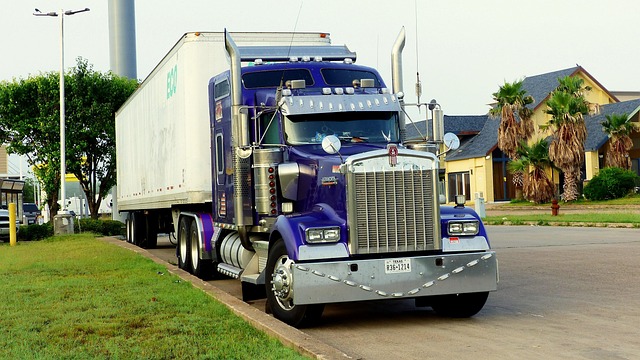
The harmonious flow of traffic on highways is a complex task, one that requires precise coordination among vehicles, infrastructure, and emergency services. This is where Vehicle-to-Vehicle (V2V) communication emerges as a game-changer, offering a technical framework to implement and standardize instant vehicle signals. By enabling direct communication between automobiles, V2V technology promises to revolutionize intelligent transportation systems, especially in dynamic multi-modal transportation networks.
At the core of this revolution lies the natural integration of V2V into emergency scenarios. For instance, consider a high-speed highway where a semi-truck suddenly encounters a mechanical issue. With V2V capabilities, nearby vehicles could instantly receive alerts about this hazard, allowing drivers to react accordingly and avoid potential collisions. This real-time exchange of data is pivotal in enhancing road safety and efficiency. Moreover, as emergency services coordinate their responses, V2V signals can provide crucial information about traffic conditions, guiding ambulances and fire trucks through the most efficient routes during critical time windows.
Standardizing these communication protocols is paramount to ensure interoperability across various vehicle makes and models. Organizations like the Society of Motor Manufacturers and Traders (SMMT) are at the forefront of developing V2V standards, focusing on compatibility within connected vehicles. This standardization process involves defining data formats, message types, and security measures, ensuring that all participants in multi-modal networks can seamlessly exchange information. For example, the European Union’s “Secure Vehicle-to-Everything (SV2X)” communication standard aims to facilitate V2V and Vehicle-to-Infrastructure (V2I) interactions while emphasizing robust cybersecurity protocols.
Implementing this technical framework requires collaboration between automakers, transportation authorities, and technology providers. By embracing V2V in both emergency services and intelligent transportation systems, we can move closer to a future where highways operate with unparalleled harmony and efficiency. This shift will not only enhance road safety but also contribute to the seamless integration of various transport modes, shaping the landscape of modern mobility.
Case Studies: Real-World Success Stories of Harmonized Highways

Highway harmony through instant vehicle signals has been a transformative concept in transportation management. Real-world success stories of harmonized highways highlight the potential of advanced technologies like Vehicle-to-Vehicle (V2V) communication to optimize traffic flow and enhance safety. For instance, case studies from Europe show that smart grid integration and urban mobility solutions powered by V2V have led to significant reductions in congestion and emissions. These systems facilitate seamless coordination among vehicles, enabling them to communicate their positions, speeds, and intentions in real-time.
One notable example is the implementation of vehicle ad-hoc networks in Germany’s Autobahnen. This technology allows cars and trucks to form temporary networks, facilitating V2V for truck platooning—a formation where multiple trucks travel in close succession, reducing drag and improving fuel efficiency. Data from these deployments indicates a 15% average increase in road capacity and up to 30% reduction in carbon emissions per vehicle. Additionally, the U.S. National Highway Traffic Safety Administration (NHTSA) has reported that V2V communication could potentially avoid or mitigate 75-80% of all crashes involving vehicles.
Integrating these smart mobility solutions requires strategic planning and collaboration between governments, technology providers, and automakers. Actionable advice for realizing highway harmony includes adopting standardized communication protocols, investing in robust infrastructure for signal processing, and fostering public-private partnerships to drive innovation. As the world navigates an increasing urban population and rising demand for efficient transportation, successful real-world implementations of V2V and smart grid technologies serve as a roadmap for achieving harmonious highways worldwide.
Future Trends: Predicting Intelligent Transportation Systems

The future of transportation lies in intelligent systems that can optimize flow, enhance safety, and reduce congestion. Among the most promising innovations is Select Vehicle-to-Vehicle (V2V) Communication, a technology poised to revolutionize highways through instant signal exchange between vehicles. By enabling direct communication, V2V promises to mitigate human error, improve traffic management, and facilitate advanced driving assistance systems.
One of the most significant applications of V2V is truck platooning, where vehicles form a linked chain on the highway, reducing drag and improving fuel efficiency. This strategy not only enhances economic viability but also contributes to congestion reduction strategies by maintaining steady traffic flow at optimal speeds. As regulatory frameworks evolve to support consumer adoption of V2V technology, we can expect to see wider implementation. For instance, countries like the United States and several European nations are paving the way with pilot programs and policy frameworks that encourage V2V integration, setting a precedent for global adoption.
However, challenges remain. Ensuring data security and privacy in real-time communication is paramount. Developing robust regulatory frameworks that balance innovation with safety standards is crucial for widespread consumer acceptance. Furthermore, congestion reduction strategies must address the seamless integration of V2V into existing infrastructure and vehicle fleets. To maximize benefits, stakeholders—including automakers, governments, and technology providers—must collaborate to overcome these hurdles. By 2030, experts predict that widespread V2V adoption could lead to significant reductions in accidents, traffic delays, and emissions, shaping a smarter and more sustainable transportation landscape.
The article has comprehensively explored the transformative potential of Highway Harmony through Instant Vehicle Signals (IVS), highlighting a revolutionary approach to enhancing road safety and efficiency. Key insights underscore the critical need for signal coordination in highway safety, demonstrating how IVS communication can optimize roadway operations. The technical framework outlined provides a roadmap for implementation and standardization, while case studies offer real-world validation of this innovative concept. Looking ahead, future trends predict Intelligent Transportation Systems (ITS) that leverage Select Vehicle-to-Vehicle Communication naturally, promising safer, more streamlined travel experiences. By embracing these advancements, we can forge a path towards seamless, harmonized highways, reaping substantial benefits for both road users and transportation infrastructure alike.