

Vehicle-to-Vehicle (V2V) communication is transforming road safety by enabling real-time data sharing between vehicles using dedicated short-range communication (DSRC). This technology enhances collision avoidance, improves emergency response times, and optimizes traffic flow in urban areas. Key benefits include up to 80% reduction in non-impairment related crashes, enhanced autonomous driving safety, and smarter urban planning. Successful global implementations require standardized protocols, robust cybersecurity, data privacy standards, and collaboration between automakers, telecom providers, and governments. The future of road safety relies on integrating AI with intelligent transportation systems (ITS), powered by 5G and beyond.
In the realm of road safety, every second counts. With traffic accidents claiming countless lives annually, there’s a pressing need for innovative solutions to mitigate risk. Herein lies the transformative potential of Vehicle-to-Vehicle (V2V) Communication technology. By enabling instant vehicle warnings, V2V communication promises to revolutionize road safety by fostering a culture of awareness and responsiveness among drivers. Currently, many fatal accidents stem from human error and lack of real-time information exchange between vehicles. This article delves into how V2V communication can overcome these challenges, providing a comprehensive exploration of its capabilities and the lives it stands to save.
- Understanding Vehicle Warning Systems: The Basics
- Instant Communication: V2V Technology Explained
- Enhancing Safety: Real-Time Data Sharing
- Select Vehicle-to-Vehicle Communication: Lifesaving Features
- Global Implementation: Regulatory and Technical Aspects
- Future Prospects: AI and Beyond for Road Safety
Understanding Vehicle Warning Systems: The Basics

Vehicle warning systems have evolved significantly over recent years, with advancements in technology driving a new era of safety measures on our roads. At the heart of this transformation lies Vehicle-to-Vehicle (V2V) communication, a game-changer in instant collision avoidance and mitigation. By enabling vehicles to ‘talk’ to one another, V2V technology can detect potential hazards before they become visible to human drivers, providing critical seconds for evasive action. This basic concept forms the backbone of smart city applications aimed at enhancing pedestrian safety and improving integrated mobility systems.
The fundamentals of these systems involve the exchange of data between vehicles equipped with dedicated short-range communication (DSRC) devices. These devices transmit information about a vehicle’s position, speed, direction, and even braking status. When another vehicle within range receives this data, it can predict potential conflicts and trigger warning alarms to alert both drivers. For example, if a car ahead suddenly brakes, the system can notify trailing vehicles, allowing them to respond swiftly and safely. This real-time communication is particularly crucial in dense urban areas with high pedestrian and vehicular traffic, where even a slight delay in reaction time could have severe consequences.
As cities embrace smart transportation infrastructure upgrades, V2V communication becomes an integral part of the integrated mobility ecosystem. By integrating these systems with other smart city initiatives like adaptive traffic signals and real-time transit data, we can create more responsive and efficient transportation networks. For instance, advanced warning systems can help optimize bus and emergency vehicle routing, ensuring safer and more predictable journeys for all road users. Moreover, leveraging machine learning algorithms to analyze collision patterns and driver behavior can further enhance the effectiveness of these systems, making them adaptive and tailored to specific urban environments.
Instant Communication: V2V Technology Explained

Vehicle-to-Vehicle (V2V) communication technology has emerged as a game-changer in the automotive industry, revolutionizing how cars interact on the road. This instant communication system enables vehicles to exchange data seamlessly, providing real-time warnings and enhancing overall safety. At its core, V2V technology relies on advanced networking capabilities, allowing cars to act as intelligent nodes in a connected network. By sharing information such as location, speed, and brake status, nearby vehicles can detect potential hazards and respond accordingly.
One of the most significant applications of V2V communication is in autonomous driving. As self-driving cars become more prevalent, V2V networks will play a pivotal role in ensuring their safe operation. For instance, when an autonomous vehicle encounters a sudden stop due to an emergency braking event, it can instantly warn other connected vehicles in its vicinity, preventing rear-end collisions and reducing the risk of cascading accidents. Market trends indicate a rapid adoption of V2V for autonomous driving, with significant investments from both automotive manufacturers and tech giants aiming to establish standardized protocols.
Moreover, V2V communication is transforming emergency services. In critical situations, vehicles equipped with this technology can alert nearby cars about imminent dangers ahead, such as hazardous road conditions or active crash scenes. This early warning system enables drivers to take evasive action, reducing the likelihood of accidents and improving overall responsiveness during emergencies. For example, in urban areas where traffic congestion is frequent, V2V networks can help manage flow and prevent collisions by providing instant updates on traffic patterns and potential bottlenecks. By harnessing the power of V2V communication, emergency services can enhance their operational efficiency, ultimately saving more lives.
Enhancing Safety: Real-Time Data Sharing

The transformation of transportation safety is upon us, driven by innovative technologies like Vehicle-to-Vehicle (V2V) communication. Enhancing Safety: Real-Time Data Sharing is a cornerstone of this revolution, aiming to reduce accidents and save lives through instant vehicle warnings. By facilitating continuous data exchange between vehicles, V2V communication enables drivers to be aware of potential hazards in real time, allowing them to take swift corrective actions. For instance, if a vehicle ahead suddenly brakes or encounters an obstacle, nearby cars can receive immediate alerts, warning their drivers to do the same, thus preventing collisions.
However, realizing the full potential of V2V communication requires careful navigation of data privacy concerns. As vehicles share information over long ranges, ensuring secure and ethical handling of personal and driving-related data becomes paramount. Public-private partnerships in transport play a crucial role here, fostering collaboration that can develop robust cybersecurity protocols and data governance frameworks. For example, urban planning initiatives integrating multi-modal transportation networks can leverage V2V communication to optimize traffic flow while protecting user privacy through anonymized data sharing and advanced encryption techniques.
Moreover, the success of V2V systems depends on standardization and interoperability across various vehicle manufacturers and network providers. In terms of practical implementation, governments and transport authorities must encourage and facilitate these partnerships. They can achieve this by establishing clear regulatory frameworks, offering incentives for technology adoption, and promoting joint research initiatives. Ultimately, enhancing safety through real-time data sharing is not just about advanced technology; it’s about creating a comprehensive ecosystem that prioritizes both public safety and individual privacy in our increasingly connected world.
Select Vehicle-to-Vehicle Communication: Lifesaving Features
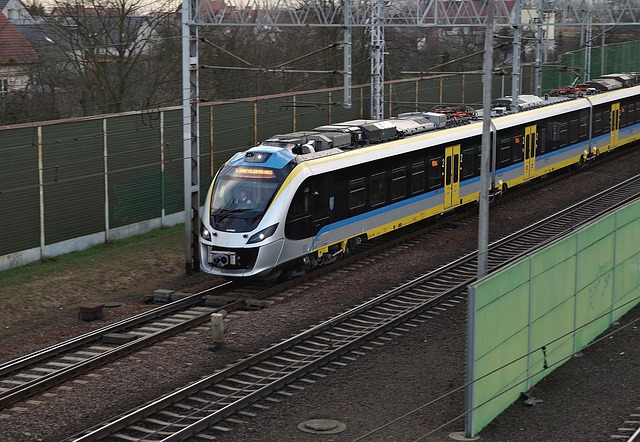
Select Vehicle-to-Vehicle (V2V) communication is a groundbreaking technology within intelligent transportation systems (ITS) that has the potential to significantly enhance road safety. By enabling direct communication between vehicles, V2V tech can relay critical information in real-time, providing drivers with instant warnings about potential hazards and reducing reaction times. For instance, if a vehicle ahead suddenly brakes sharply due to an obstacle on the road, V2V communication allows nearby cars to receive this alert promptly, giving them time to brake safely as well, thus preventing rear-end collisions.
This technology is especially valuable in congested urban areas where rapid decision-making and precise positioning are crucial for maintaining safety. By integrating V2V communication into congestion reduction strategies, intelligent transportation systems can optimize traffic flow, minimize delays, and ultimately save lives. According to a study by the U.S. Department of Transportation, V2V communication could potentially avoid or mitigate 75% to 85% of all vehicle crashes. For example, in cities like New York or Los Angeles, where heavy traffic congestion is a persistent issue, V2V technology can facilitate smoother interactions between vehicles and infrastructure, reducing the likelihood of accidents and improving overall mobility.
Implementing V2V communication requires a multifaceted approach. It involves not just advanced technology but also robust regulatory frameworks to ensure interoperability among various vehicle makes and models. As more vehicles become equipped with this capability, the benefits will compound, creating a network effect that enhances road safety for all users. Moreover, continuous data analysis from these systems can identify patterns and trends in accident-prone areas, enabling transportation authorities to implement targeted interventions. By embracing V2V communication as an integral part of their strategies, urban planning experts can design smarter, safer cities that prioritize the well-being of every resident and visitor.
Global Implementation: Regulatory and Technical Aspects

The global implementation of instant vehicle warnings, powered by Vehicle-to-Vehicle (V2V) communication, is a critical step towards saving lives on our roads. Regulatory bodies and automakers worldwide are collaborating to establish standardized protocols for V2V data exchange, ensuring safety enhancements while addressing pressing data privacy concerns. This evolution marks a significant shift in how vehicles interact, creating an ad-hoc network of connected cars that can communicate real-time information.
Regulatory frameworks play a pivotal role in facilitating consumer adoption of V2V technology. For instance, the U.S. National Highway Traffic Safety Administration (NHTSA) has been actively working on defining performance requirements and data privacy standards for V2V communication. Similarly, the European Union’s Intelligent Transport Systems (ITS) program focuses on developing interoperable solutions, ensuring that vehicles from different manufacturers can seamlessly share data. As these frameworks mature, so does the potential for long-range vehicle communication, enhancing safety beyond local areas.
Addressing data privacy concerns is paramount in the V2V landscape. Vehicle owners must be assured that their personal data remains secure while enabling beneficial communications. Automated systems should employ encryption protocols and limited data retention to safeguard sensitive information. For example, Germany’s automotive industry has been proactive in proposing solutions like anonymized data sharing, where aggregated safety data can be used without compromising individual privacy. Striking the right balance between enhancing road safety through V2V communication and protecting user data will be key to global adoption, fostering a harmonious relationship between technology and society.
Beyond regulatory considerations, automakers are investing heavily in developing robust V2V systems capable of handling complex scenarios. Integrating these advanced driver-assistance systems (ADAS) requires meticulous testing and validation to ensure reliable performance under various conditions. As the technology matures, it will not only reduce traffic accidents but also provide valuable insights into urban mobility patterns, enabling more efficient transportation planning. With successful global implementations under way, the future of connected vehicles looks promising, offering unprecedented levels of safety and convenience for drivers worldwide.
Future Prospects: AI and Beyond for Road Safety

The future of road safety lies in the seamless integration of AI and intelligent transportation systems (ITS), with vehicle-to-vehicle (V2V) communication playing a pivotal role. As we move towards more integrated mobility systems, V2V technology promises to revolutionize how vehicles interact and communicate on our roads. By enabling direct communication between vehicles, this technology can provide instant warnings and critical data exchange, significantly enhancing road safety. For instance, a study by the U.S. National Highway Traffic Safety Administration (NHTSA) suggests that V2V communications could prevent up to 80% of non-impairment related crashes.
AI-powered intelligent transportation systems have already demonstrated their potential in various applications. These systems can analyze vast amounts of real-time data from vehicles, sensors, and roadside communication networks to predict and mitigate risks. For example, advanced driver-assistance systems (ADAS) use AI to detect hazards and provide drivers with early warnings, allowing them to take evasive action. As AI continues to evolve, the integration of machine learning algorithms into ITS will enable more accurate predictions and adaptive responses to changing road conditions. This includes predictive maintenance for vehicles, optimized traffic flow management, and dynamic routing based on real-time data from integrated mobility systems.
Looking ahead, the development of 5G and beyond promises even greater capabilities for roadside communication systems. With increased connectivity and faster data transfer rates, vehicles will be able to communicate more frequently and accurately, creating a robust network effect within intelligent transportation ecosystems. This evolution is crucial for implementing advanced safety features like collaborative adaptive cruise control (CAC) and enhanced vehicle-to-infrastructure (V2I) communications. As we move towards more autonomous and connected vehicles, these systems will become the backbone of a safe and efficient future mobility landscape.
To harness the full potential of AI and V2V technology, stakeholders across industries must collaborate. This includes car manufacturers, telecommunications providers, governments, and transport authorities. Standardization efforts are essential to ensure interoperability between different vehicle models and communication protocols. By sharing data and insights, these entities can collectively develop robust safety standards and regulatory frameworks that keep pace with technological advancements. As we navigate this exciting yet complex future, the commitment to continuous innovation and collaboration will be key to saving lives and shaping safer roads for generations to come.
The integration of Vehicle Warning Systems, particularly Select Vehicle-to-Vehicle Communication (V2V), represents a transformative step in enhancing road safety globally. By enabling instant communication between vehicles, this technology facilitates the real-time sharing of crucial data, allowing drivers to navigate potential hazards swiftly. The article has illuminated the multi-faceted benefits of V2V technology, from its foundational understanding and instantaneous communication capabilities to its role in enhancing overall safety on our roads. Moreover, it has delved into regulatory and technical considerations for global implementation, as well as exploring future prospects driven by AI. Armed with this knowledge, stakeholders can strategically deploy Select V2V Communication systems, leveraging their lifesaving potential to create a safer motoring environment for all.